Microplastics and Your Top Drawer
Many of us think about microplastics as something ‘out there’ — in our oceans, in fish, and perhaps in bottled water after it has sat out in the sun. We’re only just beginning to consider microplastics as something that might be resting against our skin.
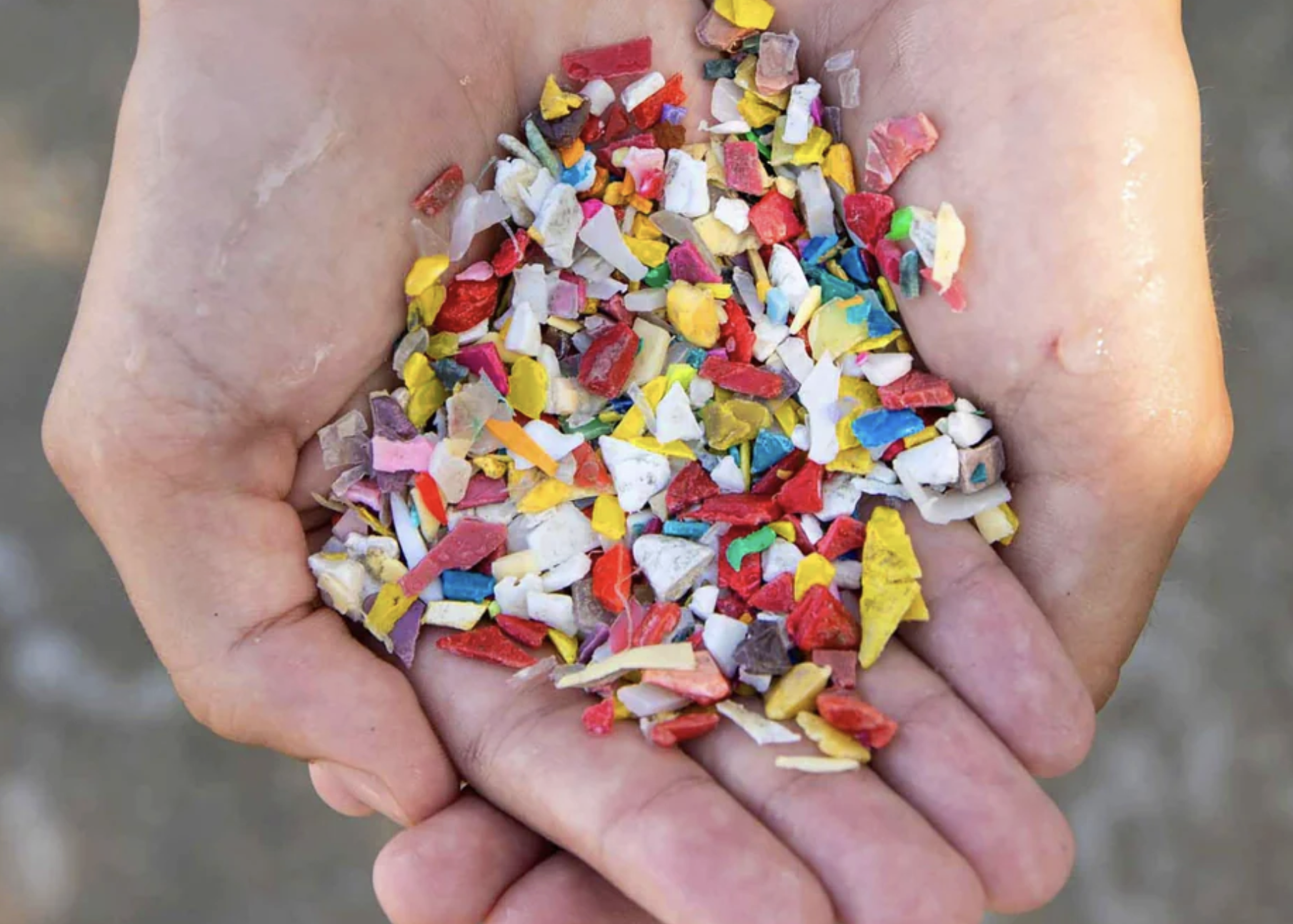
Image via 4Ocean
The truth is, microplastics are in the air we breathe, the water we drink, the food we eat, and yes — the clothes we wear (NY Times, Textile Exchange). The question isn’t just where they are. It’s what it means to live in a world where the boundary between “environmental” and “personal” has started to collapse.
If you’re wondering what this has to do with lingerie: it’s what we wear closest to our skin. It’s the place where comfort can become chemistry, where design can become a daily exposure pattern — whether we intended it or not.
What are microplastics?
Microplastics are generally defined as pieces less than 5 millimeters long, with nanoplastics measuring less than 1 micrometer and the most likely to get into human blood and tissues (EPA, Harvard Medicine, 2023). Research on human health impacts is still emerging, but what is clear is that microplastics are showing up in places we didn’t expect — including within the human body (NY Times, 2025).
Let’s be clear, plastic doesn’t ever disappear. It just breaks down or sheds into smaller particles (when hit with ultraviolet light, heat, or abrasion).
Every plastic product — and even products that we don’t typically consider plastic but contain plastic within their general makeup — have the potential to shed micro- and nanoplastics into the air, water, and soil through both use and discard. Humans risk contamination through inhalation, ingestion, or dermal absorption.
This brings us to clothing and the modern textile story we’ve normalized.
According to a study conducted by Ocean Conservancy and the University of Toronto, American adults consume an average of 11,500 microplastics a year.
How microplastics became a wardrobe issue
Let’s first go back in history for a moment…
Developed by DuPont, nylon and polyester came to market in the early 1940’s, with the popularity of nylon stockings causing “nylon riots,” with thousands of women lining up to purchase limited stock of hosiery (Science History Institute). By the 1950s, these artificial fibers had proliferated into most apparel categories, gaining in popularity for their durability, affordability, and easy-care.

Image: Hagley Museum and Library via Science History Institute Museum & Library
Fast forward: polyester is the most widely used fiber in the world, with synthetic fibers (including nylon, elastane, acrylic, etc.) making up roughly two-thirds of global fiber production (Textile Exchange). These fibers are derived from fossil-fuel-based chemicals (of which the primary material is crude oil), and shed microplastics during manufacturing, wear, and washing. Washing is a particular flashpoint, with fiber fragments passing through machine systems and ending up in waterways.
Side note: The inexpensive nature of producing these fibers has also helped to fuel the rise of fast fashion, enabling cheap and “disposable” clothing.
The recycled synthetic paradox
In recent years, recycled nylon and polyester have been widely positioned as better alternatives to their virgin counterparts. While these can be argued to be less resource intensive (less reliant on virgin feedstock), there’s nuance that tends to get skipped in the marketing.
Most recycled polyester isn’t made from old clothes. It’s usually made from plastic bottles, as both materials stem from Polyethylene terephthalate, or PET (Circular Laboratory). And here’s the tension:
Bottle-to-bottle recycling maintains a closed-loop system, allowing for repeated material use and reducing our need for virgin plastic (Changing Markets, 2021)
Plastic bottles turned into clothing cannot be further recycled, making these garments eventually destined for landfill
Textile-to-textile recycling is possible, but it’s not yet happening at scale for these fibers
As brands have been adopting recycled synthetics at breakneck speed — in attempts to reduce pollution, greenhouse gas emissions, and reliance on virgin feedstock — they have been unknowingly exacerbating the issue of microplastic pollution. A 2025 study by Changing Markets Foundation found that “recycled polyester creates 55% more microplastic pollution particles on average during washing than virgin polyester, which is less brittle. The particles were also found to be nearly 20% smaller, so more able to spread in the environment and cause harm."
Finally, recent reports bring to light fraud within the recycled polyester supply-chain, pulling into question the validity of some brands making recycled claims.
What this has to do with your underwear drawer
Take a moment to go through your undergarment drawer and look at the content labels.
Main fabric: Many bras and underwear contain elastane for stretch, unless they’re truly 100% natural-fiber. Some garments may even be fully or partially made from synthetic fibers.
Trims: Elastic bands or other notions aren’t required on the care labels, unless they make up a majority of the garment. Therefore, you might not know what they’re made of. Usually, synthetic fibers like nylon, polyester, and elastane.
Hardware: Typically metal or plastic. If metal, it may or may not contain nickel.
Thread: Often cotton/poly blends, if not 100% polyester (meaning even a natural fiber garment may include synthetic thread).
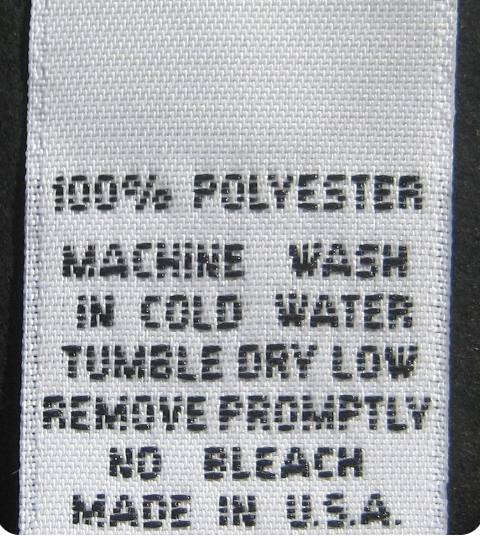
Nylon, polyester, and elastane can absolutely support garment durability. But they also introduce questions we haven’t previously considered, including about microplastics, chemical additives, and what prolonged close-to-skin contact might mean over decades of wear. Early research suggests that under certain conditions (like sweat and friction) chemicals associated with textile microplastics can potentially penetrate the skin, with the capacity for endocrine disruption and allergic responses (ScienceDirect). The science is still developing, and we need more research before drawing firm conclusions. Still, the broader point lands:
What touches your skin first should be something you can trust.
So what do we do?
I don’t share any of this to scare you, more so to impart knowledge — as knowledge is power.
These issues can seem massively out of our control, but there are many small steps we can take to reduce microplastic exposure.
If microplastics feel like a problem too big to touch, start where you actually have agency: what you wear closest to your skin.
As old undergarments wear out, consider replacing them with ones made of natural fibers:
Cotton, hemp, wool, silk
Man-made cellulosics like TENCEL™ or Lyocell produced by Lenzing, and next-gen fibers like Seacell™
Bamboo viscose (with caution!): it can be made responsibly, but is often produced with chemical-intensive methods unless it’s truly closed-loop.
No need to overhaul your drawer overnight. The idea is to start somewhere, as manageable for you to work towards less fossil-fuel based fibers against your body. Just make sure that when disposing of your old garments, try to make sure they stay out of landfill through responsible donation (if unused) or downcycling.
While I hope you’ll consider Petal + Ash when the time comes, in the meantime, brands like Araks, Oddobody, Kent, and Organic Basics offer undergarments made from natural fibers.
A small note on why Petal + Ash exists
If natural fiber undergarments already exist, why do I even enter the market? Because most women are stuck choosing between what's available: beautiful but performative and often synthetic, or natural but basic in design.
I believe that you shouldn't have to choose between:
Beauty and comfort
Style and integrity
Looking good and feeling good
That’s the whitespace I’m building into. Luxe lingerie prioritizing ecologically innovative materials and beautiful design. Made to move with your body, feel soft on your skin, and leave nothing behind — on your body or the planet.